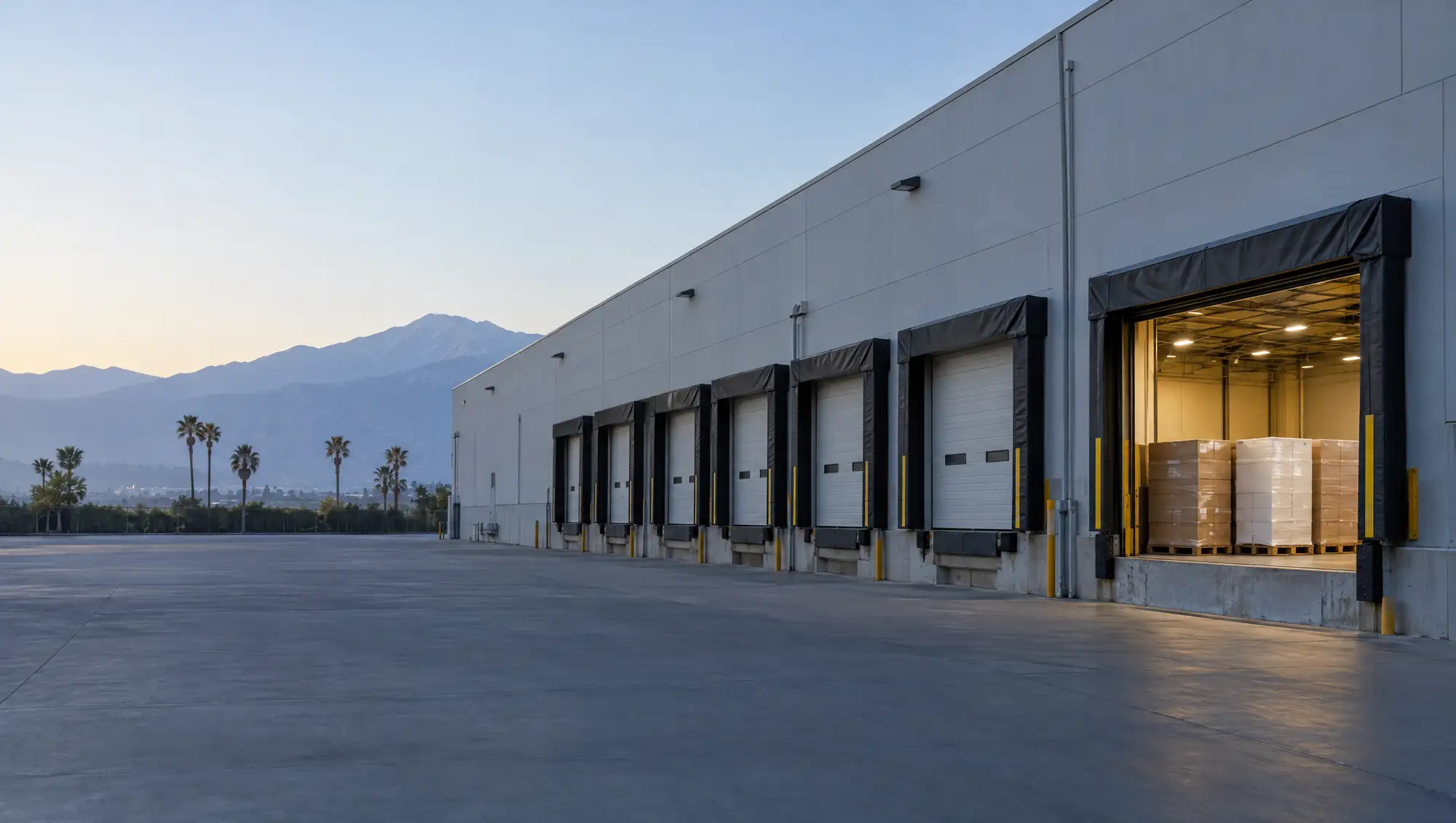
A long distribution center at dawn in the Inland Empire, with one dock door open and three wrapped pallets staged inside, and the San Gabriel Mountains behind
Inland Empire LTL consolidation

LTL consolidation into the Inland Empire for natural and organic brands

LTL consolidation into the Inland Empire puts several brands' pallets on one truck to the same distribution center. That usually means UNFI in Moreno Valley or Riverside, or KeHE in Chino or Ontario. Your pallets stop once at a hub in City of Industry, run by our warehousing partner. Then they ride one shared truck on one delivery appointment. It fits orders of 4 to 24 pallets.

  • 4 to 24 pallets
  • UNFI and KeHE buildings
  • Delivery appointments booked for you
  • A rate within 2 business hours

Licensed and bonded freight broker in Valencia, CA  ·  NMSDC minority-certified  ·  CarrierSource Top Brokerage 2026

Which Inland Empire buildings take natural-channel freight?

The main natural-channel buildings are two for UNFI and two for KeHE. Each building has its own receiving rules and its own appointment desk.

BuildingWhat it takesGuide
UNFI Moreno ValleyUNFI distribution center in the Inland EmpireShipping to UNFI
UNFI RiversideUNFI's second Inland Empire building, with its own receiving scheduleShipping to UNFI
KeHE DC 41, ChinoGrocery, natural and e-commerceShipping to KeHE
KeHE DC 45, OntarioFresh only, with a temperature check at the dockKeHE appointment rules

Receiving locations change. Always ship to the building on the purchase order, not the nearest one, and check it before the truck is booked. Every KeHE and UNFI building is listed on the Southern California freight map.

How does consolidation into the Inland Empire work?

Your pallets stop once at a hub. Then they ride to the distributor's dock on a truck you share with other brands.

Step 1

Pickup anywhere in SoCal

We book a carrier to collect your pallets around your dock hours, from LA, Orange County or the Inland Empire.

Step 2

Check-in at the hub

The pallets go to the hub in City of Industry, run by our warehousing partner. There they are checked in and staged by building.

Step 3

One truck per building

We build the load around the receiver's appointment. Other brands' freight for the same building rides with yours.

Step 4

One delivery appointment

One driver, one truck, one appointment at the dock. You get the signed paperwork back for every load.

What goes wrong on Inland Empire deliveries?

Most problems come from treating the region as one place. The buildings sit a few miles apart, but each one has its own rules.

  • Fresh sent to the wrong KeHE building. Fresh goes to Ontario, not Chino. A fresh pallet sent to Chino because it is on the way is a rejection, not a delivery.
  • Treating both UNFI buildings the same. Moreno Valley and Riverside each keep their own receiving schedule. Book the one on the purchase order.
  • Arriving outside the window. Distributor POs carry a must-arrive-by date, and early can count as a miss too. See MABD explained.
  • No appointment, or a late one. Each desk sets its own lead time. KeHE's rules are in KeHE appointment rules and late fees.

The buildings sit a few miles apart, but each one has its own rules.

Why consolidate instead of shipping LTL into the Inland Empire?

LTL is fine for a pallet or two. Past about 4 pallets to the same building, a shared truck often works better, for three reasons.

  • Fewer touches. An LTL pallet is unloaded and reloaded at every terminal on the way. A consolidated pallet is handled once, at the hub.
  • A planned appointment. A truck planned around the receiver's appointment is more likely to make the window. An LTL pallet rides the terminal's schedule.
  • No surprise rebills. LTL carriers reprice loads that pass their linear-foot limit. A consolidation quote is one all-in rate, so you can compare it with your LTL bills.

For one or two pallets, see LTL shipping for CPG brands. For a full trailer, see truckload shipping. To see what each option does to your margin, use the landed freight cost per case guide.

Who is Inland Empire consolidation for?

A good fit

  • Natural and organic food and beverage brands made or stored in Southern California
  • Orders of about 4 to 24 pallets to one UNFI or KeHE building
  • Brands with a fresh line and a shelf-stable line going to different buildings
  • Teams without a logistics person to book appointments and chase LTL loads

A better fit elsewhere

  • One or two pallets now and then: use LTL
  • Orders that fill a trailer: use a full truck
  • A nationwide launch on one date: a national consolidator with warehouses in many regions may suit you better

Shipping from Los Angeles to Vernon, Fullerton or the LA Basin? See freight consolidation in Los Angeles. To see every location, go to the retail consolidation program. If you also need storage, see 3PL for natural brands in Southern California.

What do you need for a consolidation quote?

Six details get you an accurate rate the first time.

  • Pickup address and dock hours.
  • The receiving building on the purchase order.
  • Pallet count, cases per pallet, size and weight.
  • Temperature: frozen, refrigerated or ambient.
  • The date it must arrive, or the window.
  • Routing guide rules at the receiver, if you have them.

Get a consolidation quote

Tell us what you are shipping and which building it goes to. Our team responds with a rate within two business hours.

Or call (909) 304-1068, Monday to Friday, 8 to 5 Pacific.

Frequently asked questions

What is LTL consolidation?
LTL consolidation puts pallets from several brands on one truck going to the same building. Each brand pays for its share of the truck. The freight is handled once at a hub, then delivered on one appointment. It skips the LTL terminals.
Which UNFI and KeHE buildings are in the Inland Empire?
UNFI has two: Moreno Valley and Riverside. KeHE has two: DC 41 in Chino for grocery, natural and e-commerce, and DC 45 in Ontario for fresh only. Always ship to the building on your purchase order.
Can my fresh and shelf-stable products go to KeHE together?
They go to two different buildings. Fresh goes to Ontario. Grocery and natural go to Chino. Each building has its own delivery appointment, so tell us about both lines when you ask for a quote.
How many pallets do I need to consolidate?
Consolidation fits about 4 to 24 pallets per order. Below 4, LTL or parcel usually costs less. If your order fills most of a trailer, a full truck is usually the better buy.
Can you pick up from the Inland Empire or Los Angeles?
Yes. We pick up from warehouses, co-packers and 3PLs across the LA basin and the rest of Southern California, including the Inland Empire. We book pickups around your dock hours.
Does consolidation take longer than a direct truck?
It can add one to two days, because your pallets wait at the hub for the shared truck. In return they are handled once, not at every terminal stop. Book early when the purchase order has a tight must-arrive-by date.
Can you consolidate refrigerated freight into the Inland Empire?
Yes. Temperature-controlled consolidation runs on reefer equipment. Tell us the temperature range when you ask for a quote.

Ship your next Inland Empire order on one truck

Send us the pallets, the building and the date. We come back with a rate within two business hours and book the appointment.

Sources

Page last updated November 23, 2026. The UNFI buildings come from UNFI's public distribution center locator. The KeHE buildings and what each one takes come from KeHE's distribution center list. Fr8topia's KeHE and UNFI guides cite both. Pallet ranges match the ones Fr8topia publishes on its consolidation and LTL pages. Transit times and receiving rules vary by building and lane.