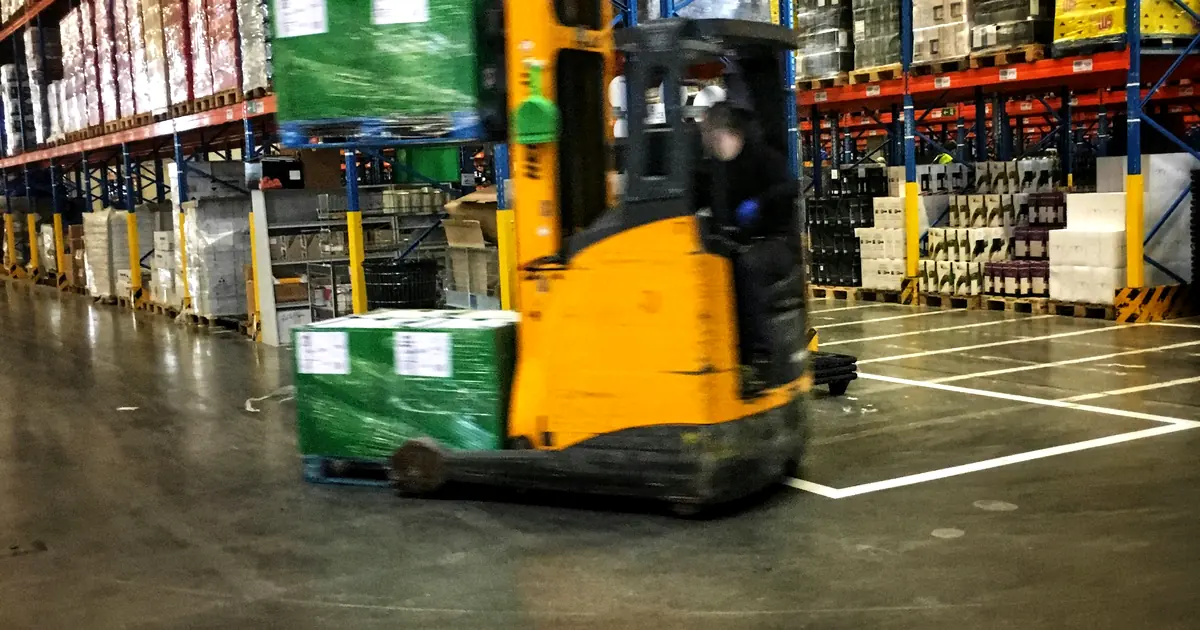
Adding warehousing makes sense once a brand is shipping the same lane often enough that storing inventory closer to the distributor beats shipping direct every time, and it does not make sense before that volume exists.
What Does Adding Warehousing Actually Mean for a CPG Brand?
Adding warehousing means storing inventory at a facility partway through the supply chain, rather than shipping direct from your production site to the distributor every time an order comes in. From there, smaller, more frequent shipments go out to the distributor DC as orders arrive, instead of one long-haul load per PO.
What Signs Suggest You're Ready for Warehousing?
The clearest sign is repeatable volume: multiple purchase orders a month going to the same distributor or region, where consolidating inventory locally would replace several long-haul shipments with shorter, cheaper local moves. A second sign is needing faster replenishment than a direct-ship model can support, especially when fill rate or on-time standards are on the line.
When Should You Stick With Direct-Ship Freight Instead?
If your volume into a distributor or region is still occasional, warehousing usually adds cost without adding speed. Storage fees, handling, and an extra transportation leg only pay for themselves once they replace enough direct-ship freight to offset them. A brand still validating a new distributor relationship is almost always better off shipping direct until that volume is proven.
Does Refrigerated or Reefer Warehousing Change the Calculus?
Yes. Temperature-controlled storage costs more than ambient storage, so the volume threshold that justifies adding refrigerated warehousing or reefer warehouse capacity is generally higher than for a shelf-stable product. The upside is also bigger: a refrigerated warehouse handoff keeps the temperature record continuous from storage to trailer, which matters for both product quality and distributor compliance documentation. See what a cold chain broker should track for how that handoff record gets used.
What Does a Warehousing Decision Look Like in Practice?
Map your actual shipment frequency and lane pattern first: how many loads a month go to the same distributor or region, and how much of that freight is refrigerated versus ambient. If a handful of lanes account for most of your volume, warehousing near those lanes, refrigerated warehouse capacity included where needed, usually pencils out faster than trying to warehouse everything at once.
Where Does Fr8topia Fit?
Fr8topia is a freight broker for the natural and organic channel first, and the broader CPG retail channel beyond that. We do not own trucks. We source and manage a vetted carrier network, and our food-grade warehousing capability covers both ambient and refrigerated warehouse storage. See our CPG retail logistics coverage in Southern California, or get in touch to map out whether warehousing fits your volume.