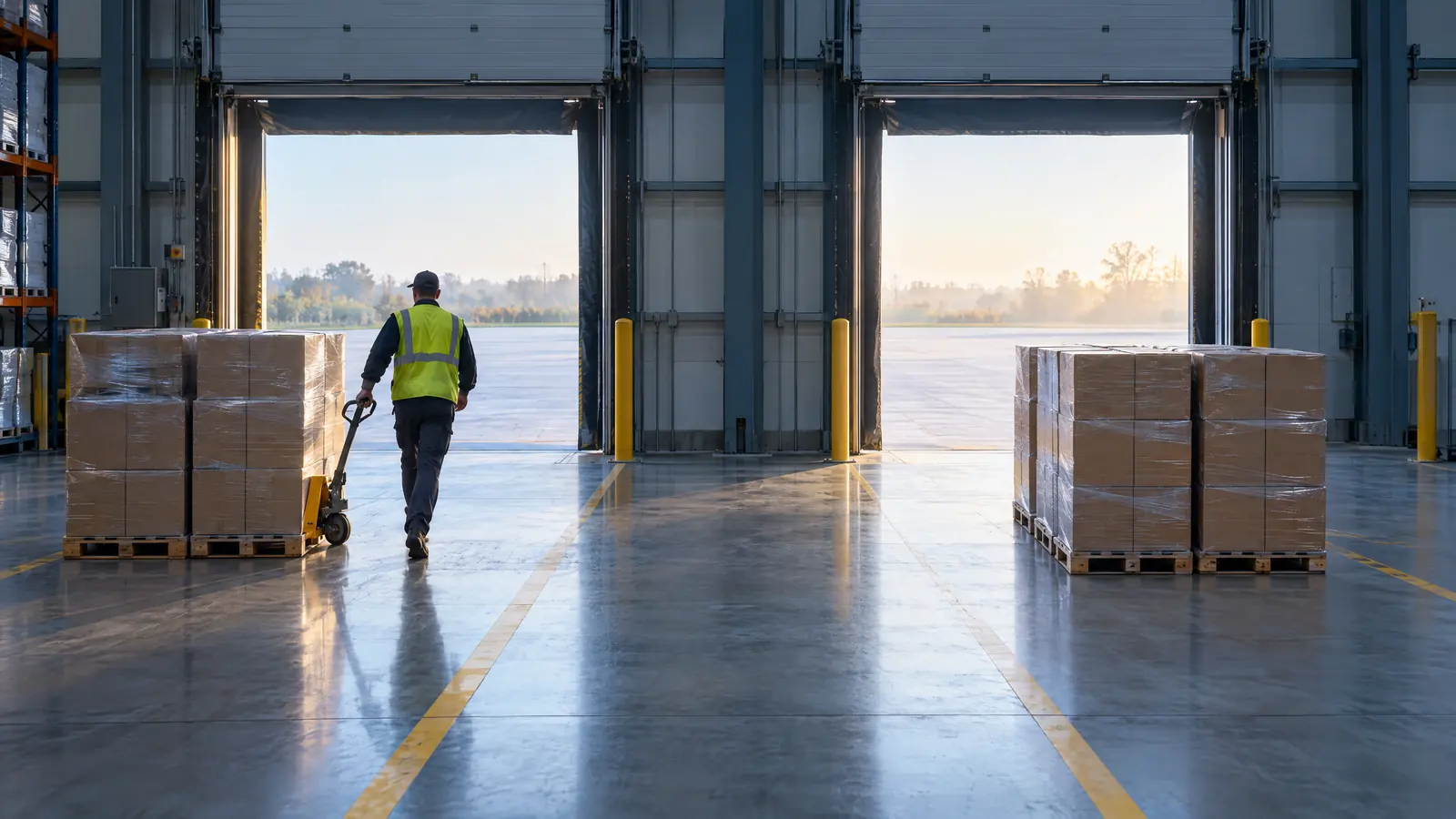
When a distributor starts ordering into a second distribution center, or a retailer takes you into a new region, you have added a freight lane, not just a purchase order. That lane has its own distance, its own order size, its own dock rules, and its own cost per case. It can also raise the cost per case on the lane you already had. The time to work that out is before the price goes on the sheet.
What Actually Changes When You Add a Building?
Four things change at once, and only one of them is distance.
- The miles. A longer haul costs more. On LTL the charge also depends on weight, freight class, and what the delivery needs at each end.
- The order size. A new building often starts with small orders. Fewer pallets means the fixed parts of a shipment are spread across fewer cases.
- The clock. Longer transit means product has to leave earlier to meet the same delivery deadline. See MABD explained for how that deadline works.
- The dock. A different building has its own appointment process and receiving hours, and in some networks its own specialty.
Growth usually arrives as a purchase order with a date on it. All four of these arrive with it, whether or not anyone priced them.
Why Does the New Building Cost More Per Case Than the First?
Because cost per case is the freight bill divided by the cases that arrive, and a new lane tends to push both numbers the wrong way. The bill is larger because the haul is longer. The case count is smaller because the building is ordering a few pallets, not a truck.
Small shipments also travel differently. A full truck is loaded once at your dock and unloaded once at theirs. An LTL pallet is unloaded and reloaded at each terminal between the two, and every extra touch adds time, a chance of damage, and cost per pallet. For refrigerated and frozen product the gap is wider, because scheduled refrigerated LTL does not run every lane every day. See refrigerated LTL to UNFI and KeHE for how small cold shipments actually move.
A second distribution center is a second freight lane, and it can make the first one more expensive too.
How Can a New Building Raise the Cost on Your Existing Lane?
By splitting your volume. Suppose one building has been ordering twelve pallets at a time, enough to ride on a shared truck. The distributor then starts filling part of that demand from a second building. Now you have two orders of six pallets, on different days, going to different places. Both are back in LTL territory.
Total cases are the same and the product is the same, and your freight cost per case has gone up on both lanes. This is the part brands do not see coming, because the growth is real and the sales number went up. The freight line is where it shows.
What Do You Need to Know About the New Dock?
Distributor networks are large. UNFI's latest annual report counts 52 distribution centers and warehouses, and KeHE's public locator lists 19 distribution centers. Two buildings in the same network, even in the same metro area, are not interchangeable. Before the first load moves, confirm:
- Which building, exactly. Ship to the address on the purchase order, and confirm it with the carrier before dispatch.
- What it receives. Some buildings are set up for frozen, fresh, or one category only. A pallet tendered to a building that does not take it is a refused load, not a late one.
- How the appointment is booked, and how far ahead that building needs the request.
- The delivery deadline on the purchase order, and what the distributor counts as late.
Our guides show where the buildings are and how they differ: shipping to UNFI, shipping to KeHE, and shipping to Whole Foods, where the receiving building is usually the distributor's.
How Do You Bring the Cost Per Case Back Down?
There are five levers. None of them works on every lane, and all of them are easier to pull before the first order than after the tenth.
- Ship orders together. Two orders going to the same building, or to buildings near each other, can often ride on one truck with two stops.
- Share a truck with other brands. Brands headed to the same distribution center can combine shipments so the pallets are loaded once and unloaded once. See retail consolidation.
- Ask about order size and timing. Ask your distributor buyer whether orders for the new building can be placed in larger quantities or on a set day of the week. Not every buyer will agree, and it costs nothing to ask.
- Hold product closer. When a region is far from where the product is made, staging inventory near the buildings can turn several long hauls into one. See when to add warehousing to your freight strategy, and when not to.
- Price the shipment two ways. Compare LTL against a shared or partial truck for the same order before you book. The cheaper quote is not always the cheaper landed cost.
When Should You Run the Numbers?
Before the price goes to the distributor or the retailer. Once a price is agreed, freight comes out of your margin, and a distributor price is slow and painful to change afterward.
If you run operations for the brand, this is the moment to put one number in front of whoever is negotiating: what a case costs to land at the new building, at the order size that building will really place. Our landed freight cost page has a calculator that turns a freight quote into a cost per case. Run it for the new lane, then keep the number by building. When one lane drifts up, you will see which cost moved.
What Should You Ask Before You Say Yes?
- Which building is it, and what does a case cost to land there at the first order size?
- Will this building take volume away from one we already ship to?
- Does it receive our temperature, and how is the appointment booked?
- How many days of transit, and does that still fit our production schedule?
- Can this order ride with another one we already ship?
- Does the price we are about to agree to carry this lane?
Whether to take the new building is a commercial decision, and the answer is usually yes. The point is to make it with the freight number on the table.
Where Does Fr8topia Fit?
Fr8topia is a freight broker for the natural and organic channel first, and the broader CPG retail channel beyond that. We do not own trucks. For a new building or a new region, send us the address on the purchase order, the pallet count, and the temperature, and we will price the lane through a vetted carrier network, with the appointment scheduled and the paperwork kept. Quotes come back within 2 business hours: request a quote. If the new building belongs to UNFI or KeHE, a free routing guide audit checks your routing guide against how your freight actually moves. For where natural-channel freight goes in Southern California, see the Southern California freight map.